
Growing Pains: Facebook Pushes Instagram to Earn Its Keep
Inside a conference room at Facebook headquarters in January 2018, a discussion among senior executives—a group known within the company as the “M Team”—turned to Instagram, the photo-sharing app that Facebook acquired in 2012 for roughly $1 billion.
Facebook’s chief operating officer, Sheryl Sandberg, congratulated the leaders of Instagram, which she said had graduated from a side bet to become a meaningful part of Facebook’s overall business, according to three people familiar with the remark. For 2018, Instagram revenues were expected to surpass $10 billion after hitting $1 billion just two years earlier, said three people familiar with the estimates. Prior meetings of the M Team led to standing ovations for Instagram’s leadership over its rapid growth.
This time the tone shifted following Sandberg’s comments. A discussion broke out about whether the app, which had relied on its parent company’s vast resources to become one of the fastest growing apps in history, should return the favor by directing users back to Facebook. Some executives in the room saw Instagram’s success as a threat to Facebook itself. The meeting would foreshadow big changes to come for Instagram.
The Takeaway
- Instagram told to roughly double ads in app
- Facebook aims to narrow ‘monetization’ gap between apps
- Mosseri focused on Asia growth, shopping on Instagram
Powered by Deep Research
Within eight months, Instagram’s co-founders Kevin Systrom and Mike Krieger resigned from the company, and Facebook CEO Mark Zuckerberg appointed a trusted lieutenant, Adam Mosseri, as Instagram’s new head.
In the roughly 11 months since Mosseri took over, most of Instagram’s senior leadership team has been replaced, Facebook has ordered Instagram to roughly double the number of advertisements in the app and the company is weaving together the technical underpinnings of the messaging services behind Facebook, WhatsApp and Instagram. Together the changes send a message that the days of independence at Instagram, whose employees had grown accustomed to their autonomy inside Facebook, are over.
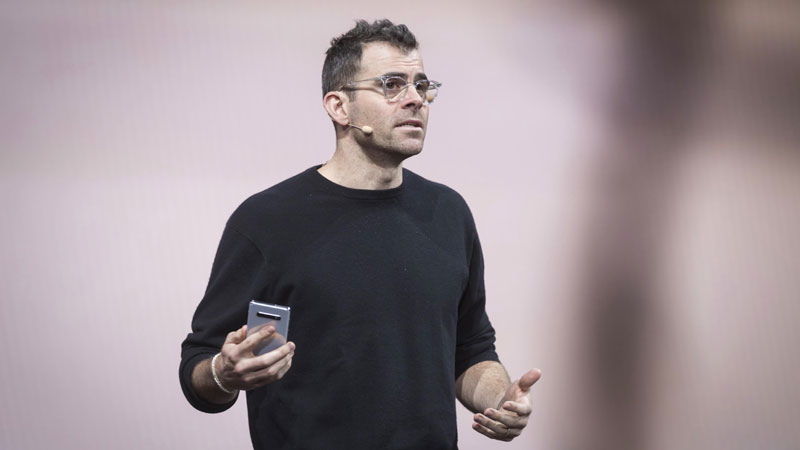
The challenge for Mosseri, the well-liked former head of Facebook’s News Feed who has worked at the company for more than a decade, is to stabilize the organization behind Instagram, an app many inside and outside Facebook see as the company’s most promising source of future growth. If the exodus of longtime Instagram employees continues, there is a risk Facebook will lose the talent that made the app special in the first place.
His efforts are a work in progress. Reshuffling of teams inside Instagram has become so constant over the past several months that employees took to a “this week in re-orgs” group on Facebook’s internal message boards to make fun of the changes, said a person who had seen the group.
The deeper integration between Instagram and its parent company could have the side benefit of making it much harder for regulators to rip the two apart, something advocates of stronger antitrust enforcement, including Democratic presidential candidate Elizabeth Warren, have advocated for. On Monday, Joe Simons, the chairman of the Federal Trade Commission, which is conducting an antitrust investigation of Facebook, told the Financial Times that it will be far more difficult to break up the company if Facebook, WhatsApp and Instagram are “completely enmeshed and all the eggs are scrambled.”
David B. Yoffie, a professor at Harvard Business School, described Facebook’s strategy for Instagram as “brilliant,” giving the company another hugely successful social platform that has been more resistant—though not immune—to the privacy scandals, disinformation and other problems that have plagued Facebook.
“Many consumers disillusioned with Facebook have migrated to Instagram, without fully understanding they are the same company,” Yoffie said. “The deep technical connections will also reduce the likelihood that Facebook can be broken up, if antitrust investigations head in that direction.“
This story is based on interviews The Information conducted with more than two dozen current and former Instagram employees. An Instagram spokesperson declined to provide Mosseri or any other employees to be interviewed for this article. Systrom and Krieger didn’t respond to a request for comment.
Happy Bedfellows
When Facebook acquired Instagram seven years ago, the startup had roughly a dozen employees, an iPhone-only app and no revenue. Known for its film camera-inspired photo filters and simple interface, Instagram had a distinct identity from Facebook. Zuckerberg, who only made occasional requests from the app’s co-founders, allowed it to flourish at arm’s length from its new parent.
Instagram employees worked out of their own buildings near Facebook’s Menlo Park, Calif., headquarters, held their own weekly all-hands meetings and threw their own holiday parties. Facebook’s top leaders, including Zuckerberg, rarely appeared at Instagram meetings and vice versa. Employees sent emails from Instagram addresses, rather than Facebook addresses.
For years, Systrom and Krieger thumbed their noses at Facebook’s requests for them to appear on the main stage at the company’s annual F8 developer conference, though they eventually sent mid-level Instagram managers to speak at last year’s event.
While Facebook is famous in Silicon Valley for its devotion to data-driven product development, Instagram’s founders relied more on intuition. Systrom, Instagram’s CEO, was the final authority on the app’s product roadmap and often intervened in small matters, like the coloring of a specific feature in the app. He personally approved every early ad that ran in the app during Instagram’s first attempts to make money, reviewing printouts of the ads on his desk, said four people familiar with the process.
Instagram was happy to take Facebook’s traffic though. Much of the app’s growth in the years following the acquisition came via a flood of eyeballs from Facebook’s main service, known inside the company as the blue app. When new Instagram users first opened the app, it recommended friends to connect with based on Facebook’s existing web of friend connections. Facebook easily allowed users to share their photos to Instagram, and it promoted Instagram in banners and bookmarks throughout the blue app—free exposure that would have cost Instagram millions of dollars if it were a separate company.
The audience for Instagram, which had just 30 million users when it was acquired, began to take off after Facebook opened its traffic spigot. By 2015, it had 400 million monthly users. The days of Systrom personally reviewing ads were over. Instagram instead began taking advantage of the machinery behind its parent company’s ad business in 2015, which pushed revenue above $1 billion by the end of 2016.
Growing Friction
By the time Facebook’s M Team convened at the early 2018 meeting, sentiment about Instagram had begun to shift inside Facebook’s senior ranks. Facebook users were increasingly sharing to Instagram, which could eventually eat into the time they were spending in the blue app, the company’s internal research showed. The trend was worrying enough that Facebook leaders assigned a team to analyze it, along with the competitive effects of its other properties, such as WhatsApp.
Increasingly, executives in meetings had begun to openly discuss how Instagram could “give back to the family,” said people familiar with the discussions. Facebook began running tests in different countries to see how well Instagram performed with Facebook’s traffic assistance and without it.
Systrom and Krieger had resisted such familial pressure in the past, but Facebook’s fingerprints began showing up in subtle ways on Instagram. In early 2018, Instagram users began to receive notifications related to their Facebook accounts inside the Instagram app.
In May of last year, a broad reorganization of Facebook’s executive ranks brought a new face to Instagram, Mosseri, who became its head of product. Mosseri had joined Facebook in 2008 as a product designer and eventually was put in charge of the company’s main source of revenue, the News Feed. His closeness to Zuckerberg—the two men are known to go running together—signaled to employees that changes were coming to Instagram.
“Everyone knew he was coming in to bring us closer,” a former Instagram employee who recently left said.
Still, Systrom continued to bump heads with his counterparts at Facebook. One dustup occurred over one of his passion projects, IGTV, which he intended to be a more elegant mobile experience for watching videos than YouTube. He believed that the abundance of influencers and celebrities on Instagram could give IGTV a better chance of competing against the Google-owned property.
But Facebook already had a YouTube competitor called Watch. Fidji Simo, then the executive in charge of Watch, and Systrom disagreed about whether IGTV should be its own app and whether the initiative would steal users away from Facebook Watch. They reached a compromise: Instagram would create an independent IGTV app, but it would give IGTV users the option of also posting their videos to Facebook.
In the meantime, Facebook investors got a wake-up call last July, when the company reported disappointing revenue for the second quarter and warned of slowing sales growth, signs that the audience for its main service was no longer multiplying the way it once did. Investors sent Facebook shares plummeting, erasing about $120 billion from its market capitalization in what was the biggest one-day drop for a company in the history of U.S. stock markets.
On that same quarter’s earnings call with investors, Zuckerberg praised Instagram for having recently hit the one billion user mark, but he added a kicker: “We believe Instagram has been able to use Facebook’s infrastructure to grow more than twice as quickly as it would have on its own.”
Soon after, as Facebook continued to worry about the effect that Instagram’s growth was having on the blue app, the parent company shut off the traffic it was funneling to the photo-sharing app, said former and current employees. Systrom broke the news to Instagram employees in an internal memo saying he disagreed with the decision. Managers at Instagram held emergency meetings with their teams to figure out how they would make do without the audience Facebook had been funneling its way. Wired earlier reported details about the incident.
Systrom then went on paternity leave for the rest of the summer and, aside from an appearance at a party to celebrate the one-billion-user milestone, wasn’t seen by Instagram employees until late September. On a Monday morning that month, Systrom and Krieger walked into the office of their boss, Facebook’s then chief product officer Chris Cox, and abruptly resigned.
The co-founders then convened an all-hands meeting with employees. The tone of the meeting was emotional as the two co-founders communicated that they had spent the past seven years of their life building Instagram and had grown tired.
Days later, Facebook named Mosseri as Instagram’s new head.
New Leadership
Since he took the helm of Instagram, Mosseri has been careful to avoid dramatic changes to the way the organization runs. In one of his first appearances to staffers after taking over last fall, he stressed the amount of time he had previously spent with Systrom and Krieger absorbing their values.
He has been vocal about finding ways to combat online bullying through Instagram, an issue Systrom also championed. He continued Instagram’s tradition of weekly all-hands meetings that are independent of those held by Facebook. He splits his time between Instagram’s new headquarters in San Francisco, where he lives with his wife and two sons, and Facebook’s campus in Menlo Park.
Mosseri has pushed back on the calls to break up Facebook from properties like Instagram, telling an audience at the Code conference earlier this year that splintering the company will make it more difficult to combat things like spam and disinformation. One of the changes Mosseri has made to Instagram is more closely integrating the group’s safety and policy efforts with the rest of Facebook. Under his watch, Instagram recently added the ability to submit a suspected piece of fake content to a panel of fact-checking partners.
One of Mosseri’s first tasks in his new role was to recruit a leadership team to fill the void left by the departure of roughly a half-dozen people who directly reported to the Instagram co-founders. Some left Facebook altogether, while others moved to different parts of Facebook, including its new Libra cryptocurrency project.
Many of his hires come from Facebook, including Justin Osofosky, a longtime lieutenant of Sheryl Sandberg, who recently became Instagram’s chief operating officer, the No. 2 position at the unit. Instagram’s new heads of engineering, communications and design all previously worked at Facebook for roughly eight years each. Instagram recently hired a new head of marketing from HP, who reports to Facebook’s chief marketing officer.
Other changes at Instagram have been more noticeable, reflecting its growing importance in the Facebook empire. Toward the end of last year, the app’s ad team was given an edict from Facebook senior management to roughly double the app’s ad load—the number of ads inserted between user posts, according to three people familiar with the matter. Ads have since turned up for the first time in the Explore section of Instagram, the second most used tab of the app that shows posts from accounts users don’t already follow.
Around the same time, Instagram’s new head of product, Vishal Shah, gave a presentation to Instagram employees in which he said Facebook wanted to narrow the gap between the amount of revenue the company generates from Instagram and the blue app based on the time users spend on each service, said three people familiar with the presentation. Facebook has long had the upper hand on the basis of that measurement, known inside the company as “monetization efficiency.”
Reducing the monetization gap between the apps would mean that the company’s business wouldn’t, in theory, suffer if Instagram continues to draw users from the Facebook app. So far, Facebook hasn’t achieved that goal, said the people.
Still, Instagram’s business has continued to soar. Earlier this year, Yousseff Squali, a tech analyst for SunTrust, valued Instagram at $158 billion as a standalone business in a note to investors and said the app was “largely responsible” for Facebook’s ad revenue growth. He estimated Instagram would generate $15.8 billion in revenue for 2019—roughly 23% of Facebook’s overall ad revenue—a forecast Squali said he would likely raise soon.
Mosseri has spent considerable time in areas that could help Instagram continue its growth. One of his first trips as head of Instagram was to Asia, where Facebook sees strong potential for Instagram’s future growth prospects. He visited the region to announce the opening of Instagram’s first overseas office for product development in Japan, meet with potential partners for the app’s shopping feature and hobnob in South Korea with K-pop stars who use Instagram.
He has made commerce on Instagram another top priority. Instagram has dozens of engineers working on its shopping experience, which includes a recent feature that lets users buy products inside the Instagram app. It represents one of the largest areas of headcount growth inside all of Facebook, said three people familiar with the matter. While work on a standalone Instagram shopping app began last year, the project has since been shelved while work continues on the shopping experience inside Instagram, two of the people said.
In the meantime, Facebook continues to further blur the boundaries between the parent company and its once independent unit. The team that runs Instagram’s messaging interface, called Direct, was recently moved to report into the Facebook Messenger team, The Information previously reported. The move, intended to help a wider effort by Zuckerberg to unify the messaging systems behind its apps, marks the first time an Instagram product group has directly reported into another part of Facebook.
A few weeks ago, employees at the company were notified that Facebook will add its name to the branding of Instagram and WhatsApp; Instagram users, for instance, will see “Instagram from Facebook” when they’re inside the photo-sharing app and while they’re loading it. Similarly, employees from Instagram and WhatsApp were also told recently that their corporate email accounts will be switched to addresses that end with fb.com.
Correction: Facebook's revenue for the second quarter of 2018 fell short of Wall Street expectations. A previous version of this article incorrectly stated that it reported disappointing earnings.